

Ask ten suppliers where their hair comes from, and most will say the same thing: temple hair. The claim has become so standard in the industry that the word has almost stopped meaning anything on its own. For a wholesale buyer, the useful question isn’t whether a supplier uses the phrase — it’s whether they can actually trace the hair back through the system that makes temple hair valuable in the first place.
How "Temple Hair" actually reaches the market?
South Indian temples — Tirupati being the largest and best known — have collected donated hair from devotees as part of religious tradition for generations. This practice predates the export industry entirely; the commercial trade grew up around something that already existed for religious reasons. That’s part of why the volume and consistency of supply from India is unmatched globally.
But the hair doesn’t go straight from temple to factory. It moves through an auction system:
•Temples periodically auction accumulated hair in bulk lots.
•Licensed traders buy the lots and grade the hair roughly by length and condition.
•Graded hair is sold on to processing facilities.
This chain matters because it’s also where the “temple hair” label starts to get diluted. Hair collected through other methods can enter the supply chain and be sold under the same name by the time it reaches an overseas buyer — often three or four intermediaries later.
What "Grading" actually Involves?
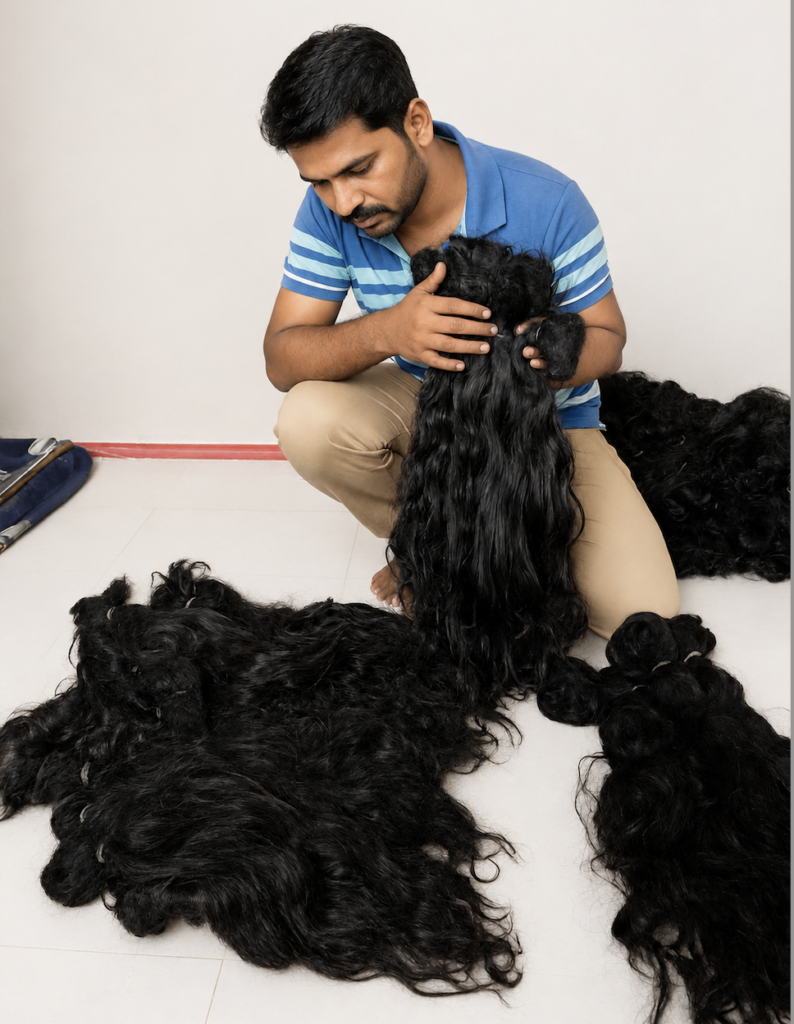
Before temple hair enters manufacturing, it goes through several quality-control and sorting steps that most buyers never see and few suppliers explain in detail:
•Length sorting — Temple collections naturally contain a range of lengths, so hair is separated into consistent length categories to ensure uniformity.
•Cuticle direction preservation — Premium temple hair is collected as it is, which naturally preserves root-to-tip cuticle alignment. Manufacturers carefully maintain this alignment through cleaning, hackling, and processing, since it’s one of the biggest factors in producing tangle-free Remy and Raw Indian hair.
•Texture and colour grading — Donor diversity means natural variation in texture (straight, wavy, curly) and shade occurs even within temple-sourced collections. Hair is carefully graded to produce consistent finished bundles.
•Removal of damaged or unsuitable strands — Each bundle is manually inspected to remove short, weak, broken, or otherwise unsuitable hairs. Temple donations are typically untreated, so heavily processed hair is uncommon — but any compromised strands are still removed during inspection.
This is labor-intensive, skilled work — and it’s the actual determinant of whether a bundle performs well, not the fact that it started at a temple.
Why the "Temple" label gets overused?
Because temple hair carries a premium in the market, the term has become default marketing language rather than a verified fact in many listings. A few practical realities worth knowing:
•Not all hair sold as “temple hair” actually went through a temple auction — some is combed or fallen hair collected through other channels and relabeled further down the chain.
•A supplier several steps removed from the original auction often can’t verify origin themselves, even if they genuinely believe the claim.
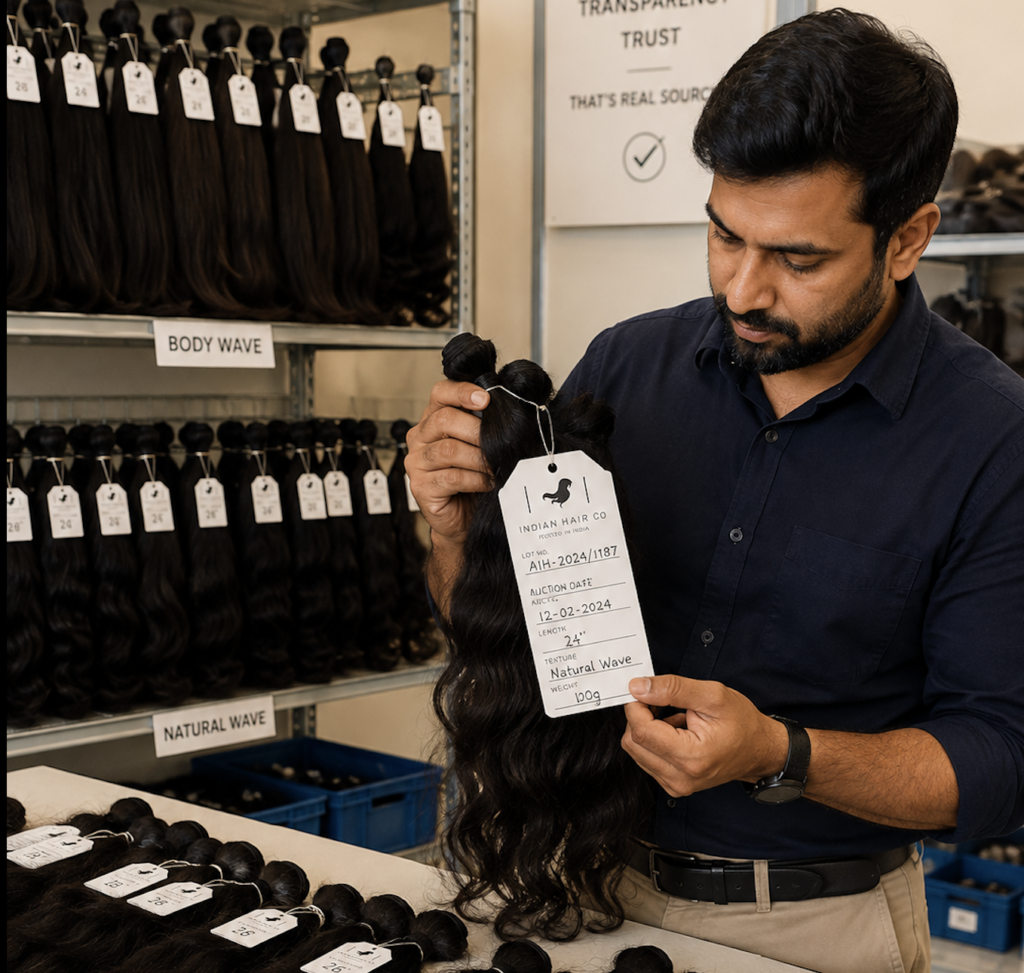
•Documentation — auction receipts, trader invoices, lot numbers — is a far more reliable signal than the label on a product listing.
None of this means temple hair isn’t valuable. It means the label alone doesn’t tell you what you’re actually buying.
Questions that separate "Real Sourcing" from marketing language
When vetting a supplier who claims temple-sourced hair, these five questions tend to surface the difference quickly:
• Can you trace this lot back to a specific auction or collection date?
• How many intermediaries handle the hair between temple auction and your facility?
• Do you purchase directly from licensed traders, or through a broker?
• How do you verify a lot’s origin when you weren’t present at the original auction?
• What percentage of your stock is genuinely temple-sourced versus other collection methods — and is it segregated in production?
A supplier who sources directly and can speak to specific lot numbers or trader relationships is a fundamentally different business than one repeating “ethically sourced temple hair” as a tagline.
What This Means for Your Buying Decision
Temple hair earns its reputation for good reason — the donation system produces large volumes of unpermed, single-collection-event hair that’s genuinely well-suited to premium manufacturing. But the value comes from the sourcing chain and the grading work that follows, not from the word “temple” appearing on an invoice.
If you’re building a brand around origin as a selling point, it’s worth being able to back that claim with something more specific than what your own supplier tells you — because your customers, particularly repeat B2B buyers, will eventually ask the same questions you should be asking now.