
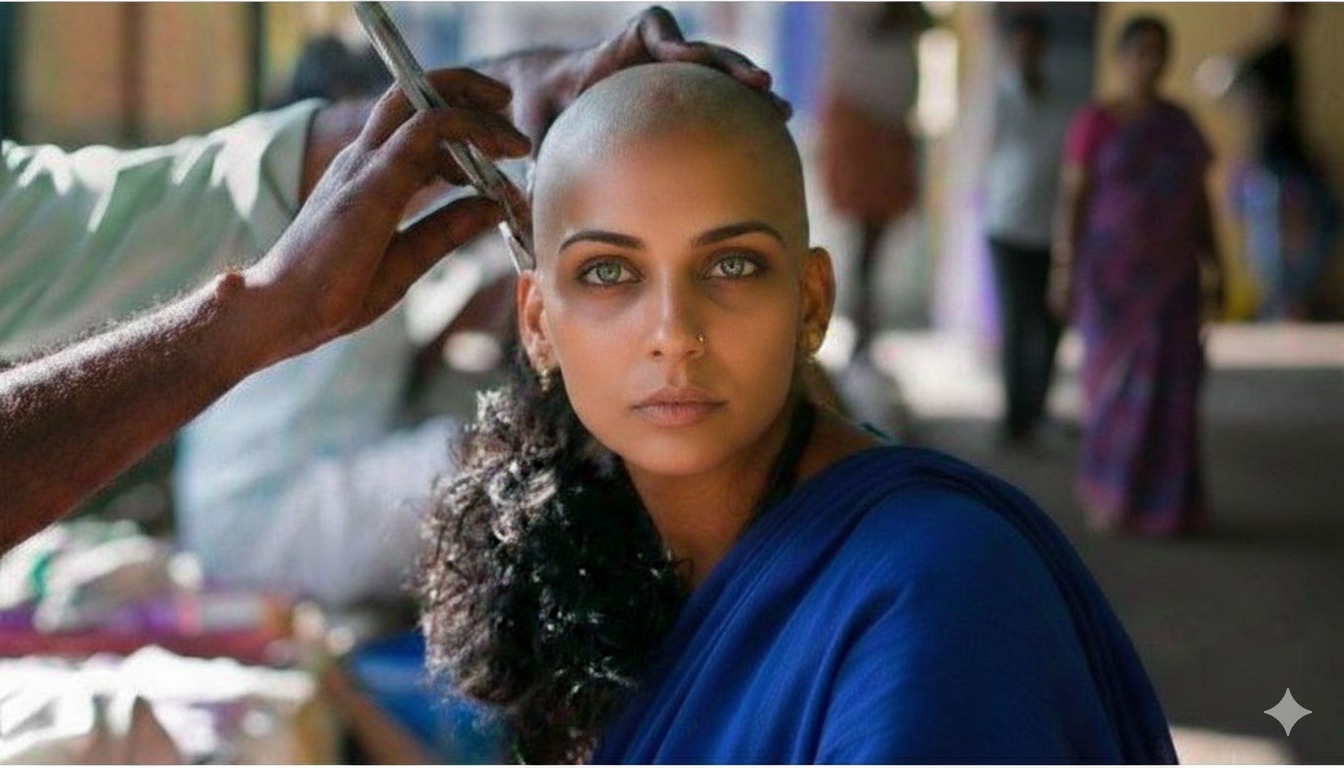
If you are in the global hair industry, you may have heard about Indian temple hair auctions. But very few people actually understand how these auctions work.
Every year, temples across India collect tons of donated hair from devotees. Instead of discarding this hair, temples organize large-scale auctions where exporters and manufacturers purchase bulk quantities.
These auctions have become one of the most important sourcing channels for companies producing:
Hair extensions
Lace wigs
Closures and frontals
Hair bundles
In this blog, we take a closer look at how the Indian hair auction system works and why it plays such a crucial role in the global human hair industry.
Why Temples Auction Human Hair
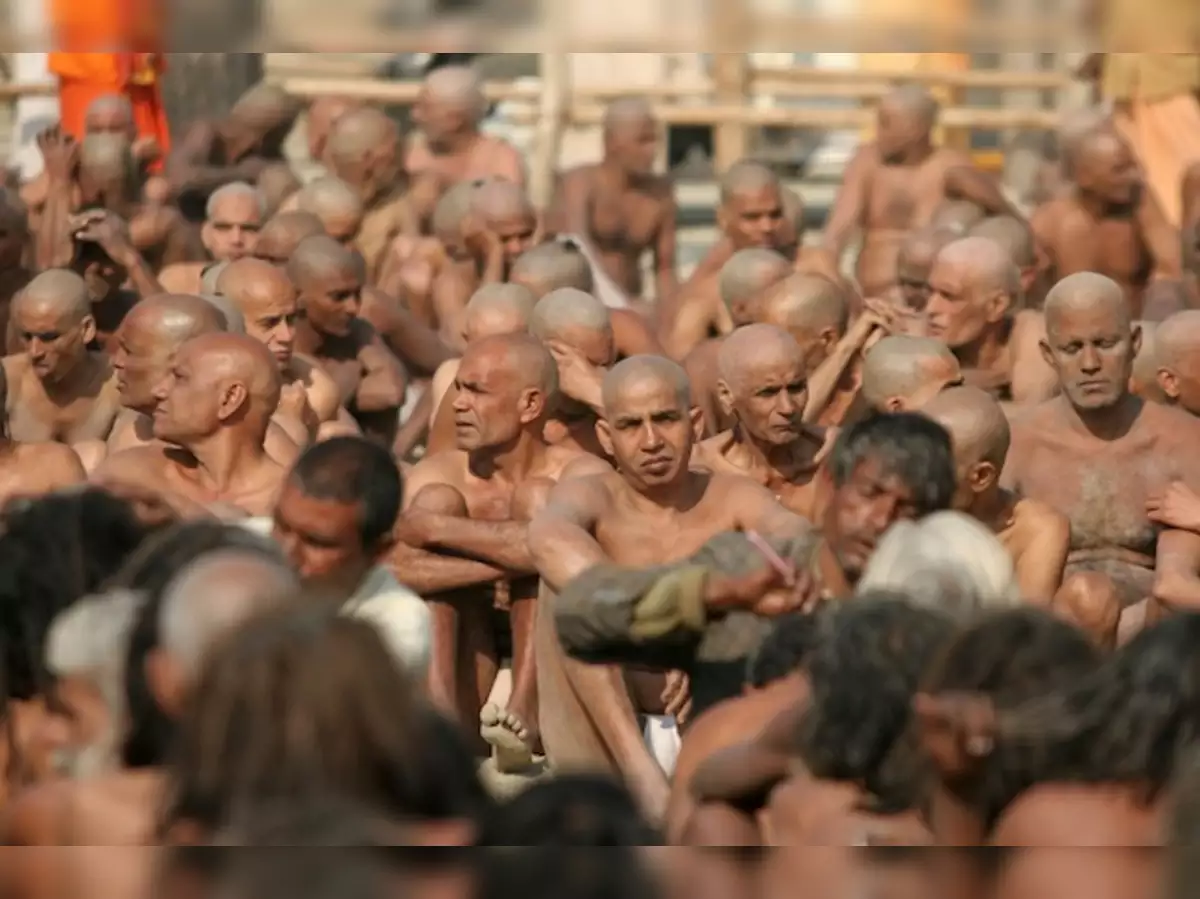
Hair donation is a spiritual ritual practiced in many Hindu temples. Devotees shave their heads as an offering of devotion and humility.=One of the most famous temples where this occurs is the Tirumala Venkateswara Temple.
Thousands of pilgrims donate hair here every day. Over time, temples accumulate huge volumes of natural human hair.
Instead of wasting this resource, temples sell the hair through auctions. The revenue generated is used to fund:
Temple maintenance
Educational initiatives
Charitable activities
This system allows temples to transform donated hair into valuable economic resources.
How Indian Temple Hair Auctions Work
The temple authority, Tirumala Tirupati Devasthanams, conducts periodic auctions where registered buyers from around the world participate.
Hair is sold in graded lots, and buyers typically include:
Wig manufacturers
Hair extension brands
Beauty product companies
Export traders
These buyers purchase large quantities and transport the hair to processing facilities.
From Temple to Global Market
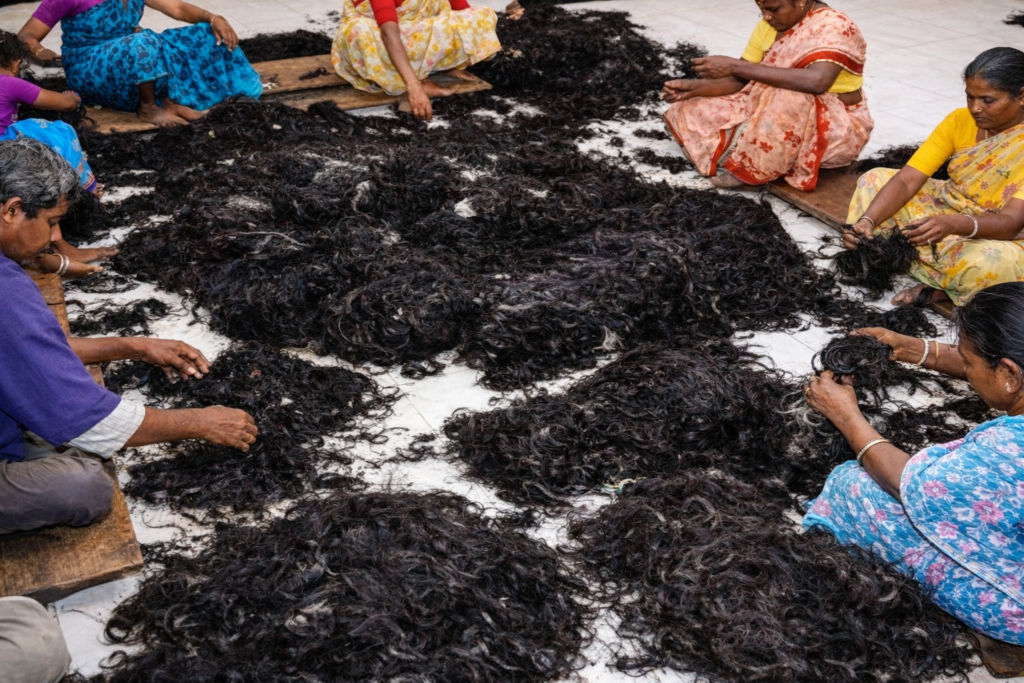
After being sold through temple auctions in India, the hair enters a large international supply chain. Buyers transport the raw hair to processing units where it goes through several stages such as deep cleaning, sorting by length and texture, and removing short or damaged strands.
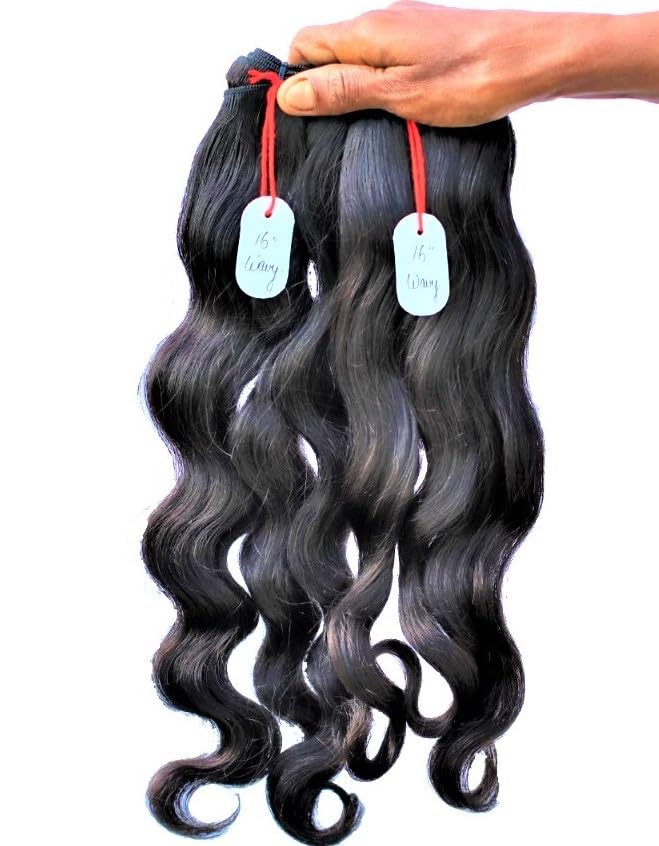
Once sorted, the hair is sent to specialised manufacturing hubs across Asia and Europe. In these facilities, it undergoes technical processes including detangling, alignment of strands, stitching into wefts, colouring, and texture treatmentdepending on the final product requirement.
The processed hair is then converted into finished products such as:
Hair extensions
Wigs
Hairpieces
These products are supplied to beauty brands, salons, and distributors across international markets. By the time they reach retail shelves, they are often positioned as premium beauty products, with prices significantly higher than the original auction value of the raw hair.
A Spiritual Offering with Economic Impact
Temple hair auctions generate millions of dollars annually. The funds support temple operations as well as social initiatives such as free meals for pilgrims, healthcare services, and educational institutions.
What begins as a sacred offering inside a temple ultimately becomes part of a global beauty supply chain. Behind every strand lies a unique journey that connects faith, culture, and international commerce.